

Product Description
Once tasked with pressing Victorian linen, this weighty antique could now hold the door open to a whole new chapter.
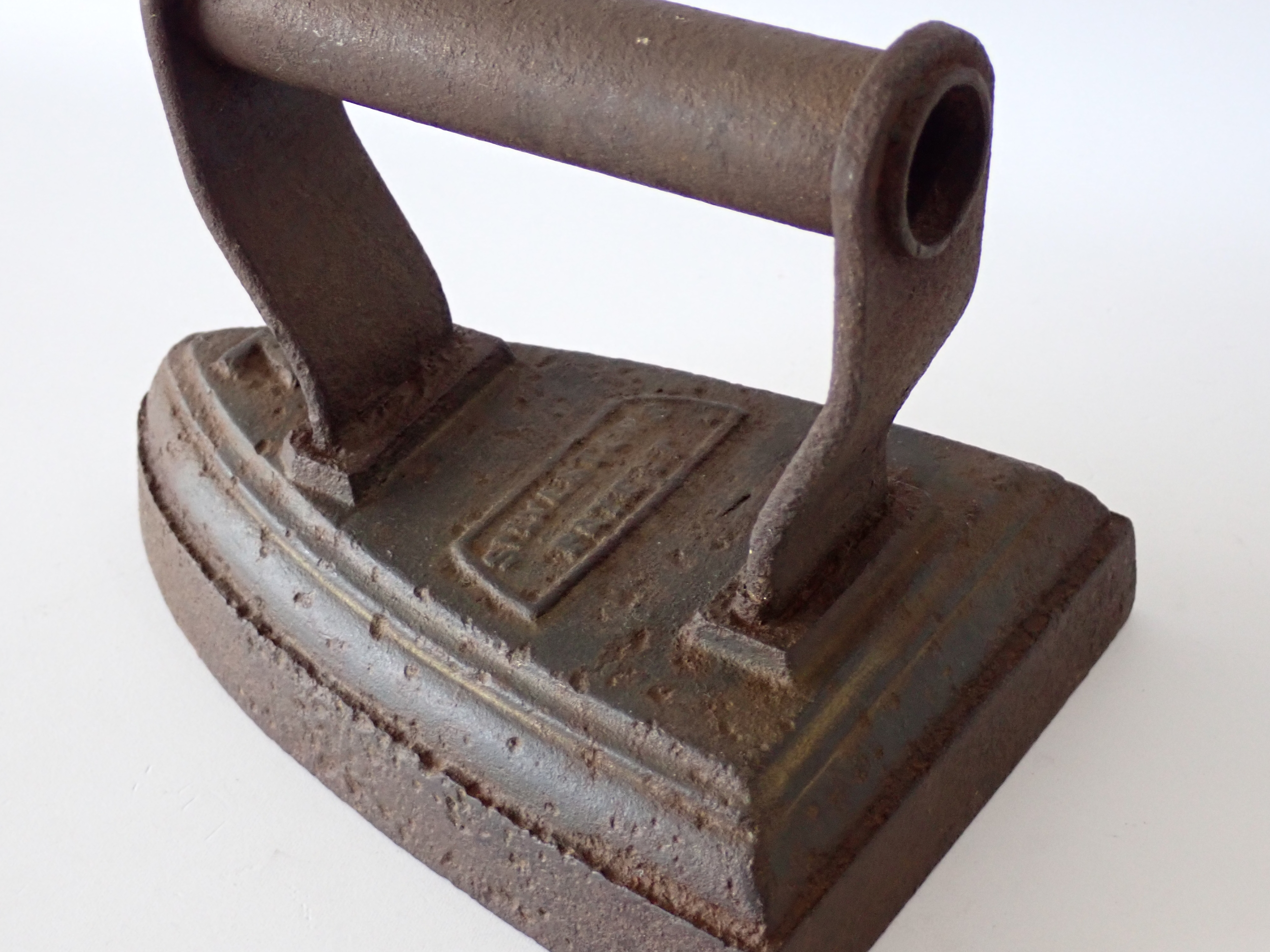
Made in England by George Salter & Co circa 1860–1880, this cast-iron flat iron bears the Sylvester Patent marking. Measuring approximately 15cm long by 12cm tall and weighing 2.7kg, it has age-related pitting, surface rust and wear consistent with its working life. Known as a “sad iron”—from an old word meaning solid or heavy—it was heated on a stove or beside a fire to press clothing.
A characterful doorstop for a country home or an evocative display piece for a kitchen or laundry. If used as a doorstop, place a protective pad underneath to prevent scratches and rust marks on flooring.
Each piece in our collection carries the subtle marks of time, adding to its authenticity and charm. Any notable details are thoughtfully included in the description and imagery. Should you wish to see more, we are always happy to assist.
If This Piece Could Talk…
“I may have ‘sad’ in my name, but I have always taken pride in an honest day’s work. Perhaps I once warmed upon a kitchen stove while someone sprinkled water over a basket of linen. Then came the lifting, pressing and careful folding—a familiar rhythm in a world without electric irons. My surface is pitted now, and I sometimes wonder about the hands that held me and the lives behind those freshly pressed clothes. These days, I would be quite content to hold a door open and listen to the household bustle once more.”